
Turkey Talk: Expert Answers from the USDA to Your Top Questions
From thawing and preparation to cooking temperatures and leftovers, preparing a Thanksgiving turkey can bring up plenty of questions. The USDA Meat and Poultry Hotline is a trusted resource and answers some of the most frequently asked questions about turkey preparation, food safety, cooking and storage, many of which we have featured here. If you need more advice along the way, their experts are just a phone call away! Call 1-888-MPHotline (1-888-674-6854) Monday through Friday, 10am to 6pm ET, or Thanksgiving Day from 8am to 2pm ET. Whether you’re roasting your first turkey or simply looking for a few helpful reminders, these expert answers will help you prepare and serve your holiday meal safely and confidently.
When Should I Purchase myTurkey forThanksgiving?
You can purchase a frozen turkey at any time, but don't wait until the last minute so you have time to let it thaw.
Want a fresh turkey? The fresh label means the turkey has never beenchilled below 26℉. Fresh turkeys should not be purchased until one or two days before Thanksgiving, unless the manufacturer’s tag has a “Best by” or “Use by” date that indicates the turkey will be safe until Thanksgiving. If there is no manufacturer’s tag, and you bring home a then purchase the Tuesday or Wednesday before.
Don’t be afraid to take advantage of sale prices on turkey since as long as the turkey is kept in the freezer it will be safe to eat indefinitely. While food poisoning bacteria doesn’t grow in the freezer, you’ll want to cook the turkey within a year for best quality.
What Size Turkey Should I Buy?
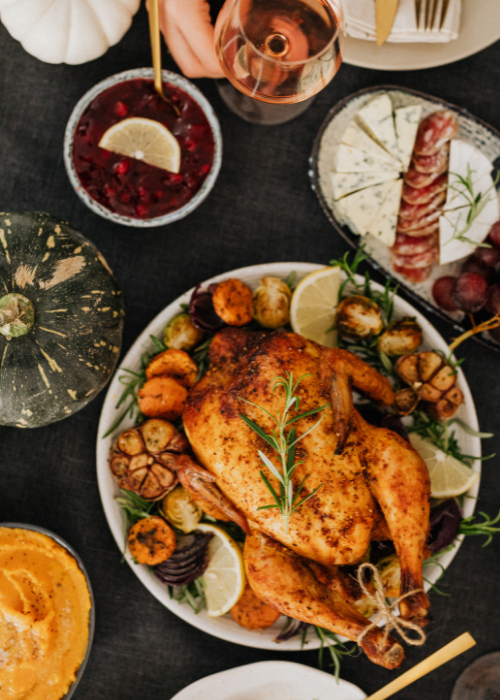
A good rule of thumb is to figure on 1 lb. per person. That’s enough turkey so that your guests have plenty to eat and you have enough leftovers to enjoy after cooking that big meal! The bigger the turkey, the greater the yield too. A turkey larger than 16 lbs. will provide about 2 servings/lb.
Is It Safe to Wash the Turkey?
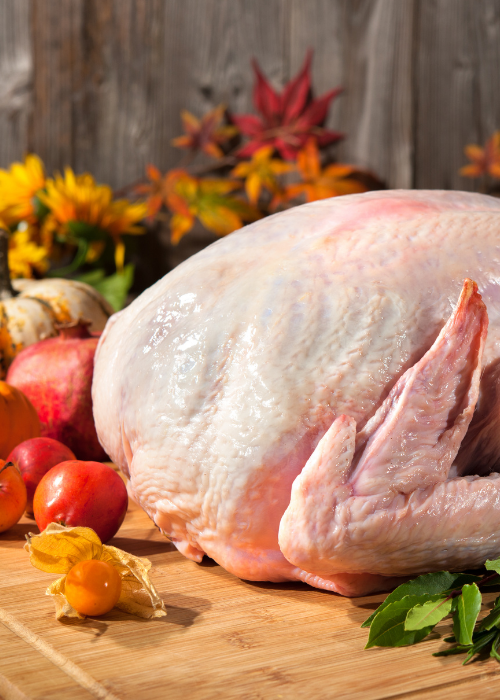
Washing is risky because bacteria can spread around your kitchen and to other foods you may be preparing. To avoid this risk, washing is not recommended.
Any bacteria that may be present, will be killed by
cooking the turkey.
How Long Will it Take to Thaw a Frozen Turkey?
Thawing in the refrigerator is recommended, and will take approximately 1 day for every 4-5 lbs. of turkey. Be sure to cook 1-2 days after thawing.
Don’t worry though if you forgot to take the turkey out in enough time to thaw. Although refrigerator thawing is preferred, you can also thaw in cold water or in the microwave if necessary, and here’s how.
Thawing in cold water: Place the turkey breast-side down in its original wrapper, in cold water to cover, and change the water every 30 minutes to keep the surface cold.
The minimum thawing time will be approximately 30 minutes per pound, and the turkey must be cooked immediately upon thawing.
Thawing in the microwave: Check the manufacturer’s instructions for the size of turkey that will fit in your microwave (it will likely only be a small turkey or breast), recommended minutes per pound, and power level to use for thawing. Just like with the cold water method, the turkey must be cooked immediately once it is thawed because some areas of the turkey may become warm and begin to cook during the thawing process, bringing it to the “Danger Zone."
*Never thaw turkey on the kitchen counter!
How Can I Tell When a Turkey is Done?
Most turkeys today come with pop-up timers, and they are generally accurate. If your turkey doesn't come with one, then you’ll want to use a meat thermometer since it’s the safest way to be sure that the turkey is done. The thermometer should be inserted into the innermost part of the breast/thigh area without touching bone. The turkey is done when the thermometer reaches a safe minimum internal temperature of 165°F. I like to use a meat thermometer even with a pop-up timer, not only for peace of mind so I know the turkey has reached 165°F, but also to check on how the turkey is progressing for timing of side dishes and serving.
Should I Place the Stuffing Inside the Turkey, or Cook It Separately?
The USDA’s Meat and Poultry Hotline DOES NOT recommend stuffing the turkey. If it is stuffed, the stuffing may not reach the correct temperature of 165°F to kill bacteria, even if the turkey itself reaches the safe minimum internal temperature of 165°F. Stuffing the turkey prolongs the cooking time and prohibits uniform cooking.
If you do plan on stuffing the turkey, here are some tips to follow:
- Prepare stuffing just before it goes into the turkey
- Dry ingredients can be mixed together ahead of time
- Perishable ingredients like butter, mushrooms, sausage, oysters, broth, cooked celery and onions should be mixed just prior to placing the stuffing inside the turkey and putting the turkey in the preheated oven
- Stuff the cavity of the turkey loosely to allow the interior of the stuffing to reach the proper 165°F temperature in the the center, and use a meat thermometer to check
- Remove the stuffing from the turkey as soon as it is completely cooled to prevent bacteria from growing

Can I Cook the Turkey Ahead of Time?
Yes, you can cook the turkey a couple days before Thanksgiving. It’s actually a great time saver and a way to maximize oven space on Thanksgiving Day.
If you do cook it in advance, slice the meat off the bone, and refrigerate in shallow containers so it cools quickly. You can also collect the drippings and prepare your gravy ahead of time, avoiding that last minute preparation which none of us are a fan of.
When it comes time to reheat the turkey, put it in a shallow pan, sprinkle with a little broth or gravy, cover with foil, and place in a preheated 325°F oven for approximately 30 minutes or until it reaches the safe temperature of 165°F.
*You can cook your turkey earlier on Thanksgiving Day if you have the ability to hold it at 140°F or above, otherwise, it is not safe to cook ahead of time and leave at room temperature.
How Long Will My Turkey Take to Cook?
Use this roasting chart only as a guide.
Turkey Roasting Chart at 325°F.
| Weight (Pounds) | Unstuffed (Hours)* | Stuffed (Hours)* |
|---|---|---|
| 4 - 6 | 1 ½ – 2 ¼ | N/A |
| 6 - 8 | 2 ¼ - 3 ¼ | N/A |
| 8 - 12 | 2 ¾ - 3 | 3 - 3 ½ |
| 12 - 14 | 3 - 3 ¾ | 3 ½ - 4 |
| 14 - 18 | 3 ¾ - 4 ¼ | 4 - 4 ¼ |
| 18 - 20 | 4 ¼ - 4 ½ | 4 ¼ - 4 ¾ |
| 20 - 24 | 4 ½ - 5 | 4 ¾ - 5 ¼ |
*Estimated cooking time

How Do I Safely Transport an Uncooked or a Cooked Turkey?
It is easiest to travel with a cold, uncooked turkey - put it in a cooler with ice so you know it is safe and cold when you reach your destination. If you need to bring a cooked turkey, it is safest to cook in advance. Slice the meat off the bone, refrigerate, and pack cold in a cooler with ice to travel, and then reheat at your destination. The only time you should transport a hot turkey is if you live very close to where you'll be bringing the turkey. If you do, then take the turkey hot out of the oven, wrap in foil, newspapers and towels and place in a box to retain the heat. Be sure that where you are going has the oven on so you can pop the turkey back in as soon as you arrive so it stays above 140°F.
How Long Will Cooked Turkey Keep?
Leftover turkey, along with many of the other leftovers, can be stored in the refrigerator for 3-4 days. If you don't plan to eat the turkey by then, you can wrap it well and place in the freezer for longer storage. Use it within 2-6 months for best eating pleasure!
If you still have questions or need assistance, call the USDA Meat and Poultry Hotline, 1-888-MPHotline (1-888-674-6854) 10:00 a.m. to 6:00 p.m. EST, Monday through Friday, or contact them at
mphotline@usda.gov.